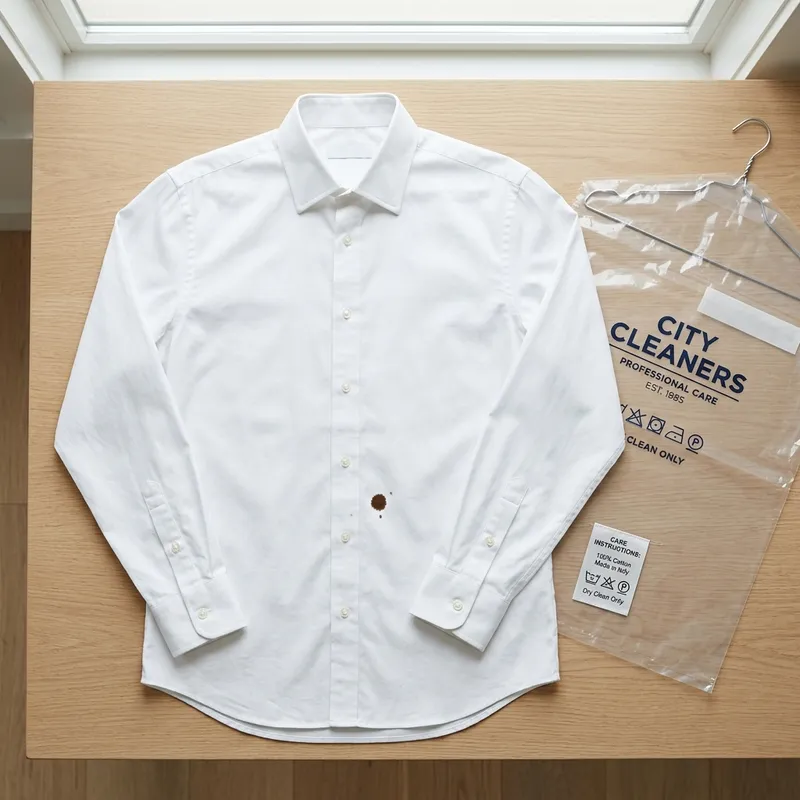
Can Dry Cleaners Remove Stains? What They Can and Cannot Fix
Quick answer: Dry cleaners can remove many stains, but not all of them. Fresh stains on sturdy fabrics have the best chance. Oil, grease, makeup and some food stains often respond well to professional cleaning. Old stains, bleach marks, dye transfer and heat-set stains may be difficult or impossible to remove fully. Before taking clothes to a dry cleaner, check the care label, do not rub the stain, avoid heat, and tell the cleaner what caused the mark. No stain removal is guaranteed.
Stained clothes are one of the most common reasons people visit a dry cleaner. Whether it is a coffee splash on a suit jacket, lipstick on a silk blouse, or a grease mark on a favourite dress, the question is always the same: can they get it out?
The honest answer is that dry cleaners can treat and remove many types of stain — but some marks are beyond repair. This guide explains what dry cleaners can usually handle, what they struggle with, and what you should do before handing over your clothes.
Can dry cleaners remove stains?
Yes, dry cleaners can remove many stains from clothes. They use specialist solvents, spotting agents and equipment that are not available at home.
But stain removal is never guaranteed. Whether a stain comes out depends on several things:
- Stain type — oil, food, ink, dye, bleach and rust all behave differently.
- Fabric — silk, wool, cotton, polyester and denim each react differently to cleaning.
- Colour — dark garments may hide marks better, but colour loss is harder to fix.
- Age — fresh stains are far easier to treat than old ones.
- Previous treatment — rubbing, ironing, tumble drying or using the wrong stain remover at home can set the stain permanently.
- Information — telling the cleaner what caused the stain helps them choose the right method.
A good dry cleaner will inspect the garment, test a small area if needed, and give you an honest assessment before cleaning.
Will dry cleaning remove a stain?
Dry cleaning may remove or reduce many stains, especially if the garment is taken in soon after the spill. Some stains — particularly oil-based marks — respond well because dry-cleaning solvents dissolve grease effectively.
However, not every stain disappears during the standard cleaning cycle. Some marks need separate spotting treatment before the garment goes into the machine. This is a targeted process where the cleaner applies specific agents directly to the stain.
No cleaner can honestly promise that every stain will vanish. If someone guarantees complete removal without seeing the garment first, be cautious.
What stains can dry cleaners usually treat?
| Stain type | Chance of removal | Important note |
|---|---|---|
| Oil and grease | Often good | Dry-cleaning solvents work well on oil-based marks |
| Makeup (foundation, lipstick) | Often good | Tell the cleaner which product caused it |
| Food (sauce, gravy, curry) | Moderate to good | Depends on colour and whether the stain was rubbed |
| Coffee and tea | Moderate to good | Better results when treated fresh |
| Wine (red and white) | Moderate | Red wine is harder, especially on light fabric |
| Sweat marks | Moderate | Old yellowed marks are more difficult |
| Perfume or deodorant marks | Moderate | Some may cause discolouration over time |
| Mud | Often good | Let it dry and brush off excess before cleaning |
| Ink (ballpoint) | Variable | Depends on ink type and fabric |
| Detergent marks | Moderate | May need rinsing or re-cleaning |
“Often”, “moderate” and “variable” are used because no result is certain. Fabric, colour and stain age all affect the outcome.
What stains can dry cleaners not remove?
Some stains are extremely difficult or impossible to remove, even for a professional:
- Bleach marks — these are not stains but colour loss. The dye has been stripped from the fabric.
- Dye transfer — colour from another garment that has bled onto yours. Very hard to reverse.
- Colour loss — from sun fading, repeated washing, or chemical damage.
- Old set-in stains — marks that have been left untreated for months or years may have bonded with the fibre.
- Heat-set stains — if a stain has been ironed over, tumble dried on high heat, or washed in very hot water, it can become fixed in the fabric.
- Rust — rust marks can sometimes be reduced but are notoriously stubborn.
- Strong chemical damage — acid, paint stripper, or harsh cleaning products may damage the fabric itself.
- Ink on delicate fabrics — permanent marker on silk, for example, is very hard to treat without damaging the garment.
- Stains hidden for a long time — marks that oxidise and change colour over months become much harder.
Even when a stain cannot be fully removed, a dry cleaner may be able to improve the appearance of the garment.
How do dry cleaners remove stains?
The process is simpler than most people think:
- Inspection — the cleaner looks at the garment, checks the care label and identifies the fabric type.
- Stain identification — they work out what caused the stain, or ask you.
- Pre-treatment (spotting) — specific agents are applied directly to the stain before cleaning. Different stains need different treatments.
- Cleaning — the garment is cleaned using solvents (for dry cleaning) or controlled wet-cleaning methods, depending on the fabric and care label.
- Post-check — the cleaner inspects the garment again. If the stain remains, they may repeat the spotting process.
- Finishing — pressing, steaming and packaging.
The care label and fabric type guide every step. A good cleaner will not use the same method on silk as they would on cotton.
Are stains permanent once dried?
Not always. A dried stain is harder to remove than a fresh one, but “dried” does not automatically mean “permanent.”
What makes a stain more likely to become permanent:
- Heat from an iron, tumble dryer or hot wash applied before the stain was treated.
- Rubbing or scrubbing that pushes the stain deeper into the fabric.
- Using the wrong cleaning product, which can react with the stain and fix it.
- Leaving the stain for weeks or months, allowing it to oxidise.
If your stained garment has simply air-dried without heat, there is still a reasonable chance a professional cleaner can treat it. The key is to avoid applying heat to any stain until it has been properly dealt with.
Can dry cleaning remove old stains?
Old stains are less predictable than fresh ones. A stain that has sat in a wardrobe for months may have changed colour, oxidised, or bonded with the fibre at a chemical level.
A dry cleaner may be able to reduce an old stain, but full removal is less likely. Some old marks leave a shadow or outline even after treatment.
If you are taking an old stain to a cleaner, point it out clearly and mention how long it has been there. This helps them choose the right approach and set realistic expectations.
Can dry cleaners remove stains from clothes?
Yes, dry cleaners regularly treat stains on all kinds of clothing — suits, coats, dresses, shirts, formalwear, uniforms and dry-clean-only garments.
For everyday washable clothes, you may be able to treat simple stains at home. But for delicate, expensive or sentimental items, professional cleaning is safer than experimenting with home remedies. This is especially true for:
- Wedding dresses and formalwear
- Tailored suits and blazers
- Silk, cashmere or embellished garments
- Vintage or irreplaceable clothing
Can dry cleaners remove stains from white clothes?
White clothes can sometimes respond well to professional treatment. Without darker dyes to worry about, certain brightening techniques may be used more freely.
But white fabric also shows every mark clearly, and some problems are particularly difficult on white:
- Yellowing from age, sweat or storage.
- Bleach splashes that have removed colour unevenly.
- Dye transfer from coloured garments washed or stored together.
- Old sweat stains that have turned yellow and set.
Do not use household bleach on white clothes unless the care label specifically says it is safe. Bleach can weaken fibres and cause uneven patches, even on white fabric.
Can dry cleaners remove stains from fabric?
The word “fabric” covers a wide range of materials, and each one behaves differently during cleaning:
- Cotton — generally sturdy and responds well to most cleaning methods.
- Wool — needs careful handling. Wool can shrink or felt if treated wrongly.
- Silk — delicate. Water marks and rubbing can damage silk easily.
- Polyester — durable, but oil stains can cling to synthetic fibres.
- Linen — strong but creases easily. Some stains may leave a shadow.
- Viscose — can be fragile when wet. Needs professional care.
- Denim — sturdy, but colour can fade with aggressive treatment.
- Embellished fabric — beads, sequins, glue and special finishes need extra caution.
Always check the care label before deciding whether to clean at home or take the item to a professional.
Can dry cleaners remove stains from jeans?
Jeans can usually be washed at home, but some stains may need professional help — particularly grease, oil, paint, or old marks that have set in.
Be aware that denim colour can fade during aggressive stain treatment. If your jeans are dark wash, raw denim, selvedge, or have a special finish, mention this to the cleaner. They may adjust their method to protect the colour.
For standard jeans with a fresh food or drink spill, home washing is often enough. For stubborn or old stains, or jeans you want to keep looking their best, a dry cleaner can help.
Can dry cleaners remove detergent stains?
White streaks, powdery residue or dull patches from detergent are common. These are not always true stains — they may be detergent that has not dissolved or rinsed properly.
A dry cleaner may be able to remove detergent residue through proper cleaning. In some cases, simply rinsing the garment thoroughly or re-washing with less detergent solves the problem.
Do not add more detergent to fix detergent marks. This usually makes the problem worse.
If the residue is on a delicate or dry-clean-only garment, take it to a professional rather than trying to rinse it at home.
Does dry cleaning remove stains better than washing?
It depends on the stain and the fabric.
- Dry cleaning is often better for: oil-based stains, grease, makeup, and garments labelled dry clean only. The solvents used in dry cleaning dissolve oils more effectively than water and detergent.
- Washing may be better for: water-based stains like juice, mud, or sweat on washable fabrics like cotton and polyester.
Neither method is universally better. The right choice depends on the care label, the stain type and the fabric. Using the wrong method can set a stain or damage the garment.
Dry cleaner stain removal cost
There is no single price for stain removal because costs vary depending on:
- The type of garment (a shirt costs less than a wedding dress).
- The fabric (delicate fabrics need more careful handling).
- The stain type (simple marks may be included in the cleaning price; stubborn stains may need extra spotting treatment).
- The number of stains.
- Whether specialist treatment is needed.
- Your local dry cleaner’s pricing.
Ask for a quote before leaving expensive or delicate garments. A reputable cleaner will tell you upfront if they think the stain is treatable and what the cost may be.
What should you do before taking stained clothes to a dry cleaner?
A simple checklist:
- ✅ Check the care label on the garment.
- ✅ Blot fresh stains gently with a clean white cloth — do not rub.
- ✅ Keep the garment away from heat — no ironing, no tumble dryer, no hot radiator.
- ✅ Remember what caused the stain if you can.
- ✅ Tell the dry cleaner what happened and what the stain is.
- ✅ Mention anything you have already tried at home.
- ✅ Take the garment in as soon as possible.
- ❌ Do not scrub or rub the stain.
- ❌ Do not iron the stained area.
- ❌ Do not tumble dry the garment before the stain is treated.
- ❌ Do not use random stain removers on delicate fabrics.
- ❌ Do not use bleach unless the care label says it is safe.
What not to do with stained clothes
These mistakes can turn a treatable stain into a permanent one:
- Do not scrub. Rubbing pushes the stain deeper into the fabric and can spread it.
- Do not use bleach casually. Bleach can strip colour and weaken fibres, even on white fabric.
- Do not apply heat. Ironing, tumble drying or using hot water on a stain can set it permanently.
- Do not hide the stain from the cleaner. They need to know where it is and what caused it.
- Do not cut care labels out before cleaning. The cleaner needs the label to choose the right method.
- Do not keep wearing the stained item for weeks. The longer you wait, the harder the stain becomes to remove.
- Do not use several cleaning products together. Mixing chemicals can damage fabric or create unsafe reactions.
- Do not assume old stains will come out easily. Be realistic and give the cleaner full information.
Stain removal by fabric type
| Fabric | Dry-cleaning note | Extra caution |
|---|---|---|
| Cotton | Generally responds well to both washing and dry cleaning | High heat can set stains |
| Wool | Professional cleaning recommended for stains | Can shrink or felt if mishandled |
| Silk | Dry cleaning usually safest | Water marks and rubbing damage silk easily |
| Linen | Can be dry cleaned or washed depending on garment | Creases easily, some stains leave shadows |
| Polyester | Durable, responds to most methods | Oil stains can cling to synthetic fibres |
| Viscose | Professional cleaning recommended | Fragile when wet, can lose shape |
| Denim | Usually washable, dry cleaning for special pieces | Colour may fade with aggressive treatment |
| Embellished fabric | Dry cleaning with care | Beads, sequins and glue may be affected by solvents or heat |
Always check the garment’s own care label. This table is general guidance only.
Common mistakes
-
Mistake: “Dry cleaners can remove every stain.” Reality: No cleaner can guarantee every stain will come out. Success depends on the stain type, fabric, age and previous treatment.
-
Mistake: “Old stains are always impossible to remove.” Reality: Old stains are harder, but not always permanent. A professional may be able to reduce or improve them.
-
Mistake: “Washing is always better than dry cleaning.” Reality: Washing is better for some stains and fabrics, but dry cleaning is better for oil-based marks and delicate garments. The care label should guide your choice.
-
Mistake: “Bleach is safe on all white clothes.” Reality: Bleach can weaken fibres and cause uneven whiteness. Only use it if the care label specifically says it is safe.
-
Mistake: “Detergent stains need more detergent.” Reality: Adding more detergent makes residue worse. Rinse thoroughly or take the garment to a professional.
People Also Ask
Will dry cleaning remove a stain?
Dry cleaning can remove or reduce many stains, especially oil, grease, makeup and food marks. Success depends on the stain type, fabric, colour and how old the stain is. Fresh stains treated quickly have the best chance. No result is guaranteed.
What stains can dry cleaners not remove?
Bleach damage, colour loss, dye transfer, heat-set stains, old oxidised marks and fibre damage are the hardest to treat. These are often physical damage to the fabric rather than removable dirt. A cleaner may still be able to improve the garment’s appearance, but full removal is unlikely.
How do dry cleaners remove stains?
They inspect the garment, identify the stain and fabric, apply targeted pre-treatment (spotting) to the stain, clean the garment using solvents or wet-cleaning methods, then check the result. If the stain remains, they may repeat the spotting process. The method depends on the care label and fabric type.
Are stains permanent once dried?
Dried stains are harder to remove, but not always permanent. A stain that has simply air-dried may still respond to professional treatment. Stains that have been set by heat — from an iron, tumble dryer or hot wash — are much more likely to be permanent.
People Also Search For
Can dry cleaners remove stains from clothes?
Yes, dry cleaners treat stains on suits, coats, dresses, shirts and many other garments. Washable clothes with simple stains may be treatable at home, but delicate, expensive or dry-clean-only items are safer with a professional.
Can dry cleaners remove stains from white clothes?
White clothes can be treated, and some brightening methods work well. But bleach damage, yellowing, dye transfer and old sweat stains on white fabric can be very difficult to reverse.
Can dry cleaners remove stains from fabric?
Fabric type matters. Cotton, polyester and linen are generally easier to clean. Silk, wool, viscose and embellished fabrics need more careful treatment. The care label is the best guide.
Can dry cleaners remove stains from jeans?
Many jean stains can be washed out at home, but grease, oil and old marks may need professional help. Denim colour can fade with aggressive treatment, so mention if your jeans are dark wash or special finish.
Can dry cleaning remove old stains?
Old stains are harder because they may have oxidised or bonded with the fabric. A professional may reduce the mark, but full removal is less likely than with a fresh stain.
Dry cleaner stain removal cost
Cost depends on the garment type, fabric, stain, number of marks and whether specialist spotting is needed. Ask your cleaner for a quote before leaving valuable or delicate items.
Does dry cleaning remove stains better than washing?
Dry cleaning is often better for oil-based stains and delicate fabrics. Washing may be better for water-based stains on washable materials. Neither is universally better — the right method depends on the stain and the care label.
Can dry cleaners remove detergent stains?
Detergent residue — white streaks or dull patches — can often be treated by proper rinsing or re-cleaning. If the marks are on a delicate or dry-clean-only garment, a professional cleaner is the safest option.
Bottom line
Dry cleaners can remove many stains, but no result is guaranteed. Fresh stains treated quickly have the best chance. Old stains, bleach damage, dye transfer and heat-set marks are much harder and may not come out fully.
Before visiting a cleaner, check the care label, blot fresh marks gently, avoid heat and rubbing, and do not use random stain removers on delicate fabric. Tell the cleaner what caused the stain and what you have already tried.
For expensive, delicate or sentimental garments, take them to a professional early — before home experiments make things worse.
This article is general clothing care advice. Results depend on the stain type, fabric, colour, age and cleaning method used. Always follow the care label on your garment.
Frequently Asked Questions
Not usually. If the care label says dry clean only, do not wash it at home. Even on washable clothes, washing with the wrong method or temperature can set the stain deeper. If you are unsure, take the garment to the dry cleaner first and let them decide on the best treatment.
Yes, always. Knowing the cause helps the cleaner choose the right treatment. Mention whether it is oil, food, wine, ink, makeup or something else. Also tell them if you have already tried any cleaning at home, even if it did not work.
Oil and grease stains often respond well to dry cleaning because the solvents used are effective on oil-based marks. Fresh oil stains have the best chance. Old or heat-set oil stains are harder, but a professional may still be able to reduce them.
Sweat stains can often be treated, especially on shirts and suits. Yellowed sweat marks that have been left for a long time or exposed to heat may be more difficult. The cleaner may use spotting treatment before cleaning to improve results.
Some ink stains can be treated, but success depends on the ink type, fabric and how long the stain has been there. Ballpoint ink on cotton or polyester may respond to treatment. Permanent marker or ink on silk or delicate fabric is much harder and may not come out fully.
No. Bleach removes colour from fabric, so a bleach mark is not a stain that can be cleaned off — it is colour loss. A dry cleaner cannot restore the original colour. In some cases, a specialist may be able to re-dye the area, but this is a separate service and results vary.
Related Posts
 guides
 Ninja Express Chop Mini Chopper Review: Is It Worth It?
Looking for the best mini chopper for a small kitchen? Read our honest Ninja Express Chop Mini Chopper review to see if this compact power pod is worth your money.
Read More guides
 How Much Does It Cost to Rewire a Home in the UK? (2025/26)
Calculate the average cost of rewiring a house in the UK. Typical price ranges for 2, 3 and 4 bed homes, signs you need a rewire, and process timeline.
Read More guides
 UK Social Media Ban for Under-16s: What Parents Need to Know
Understand the upcoming UK social media ban under 16. Learn which apps are banned, when it starts, how it is enforced, and the impact on families.
Read More