Quick answer: There is no confirmed plague outbreak in Russia as of 7 October 2026. A 28-year-old worker at the Irkutsk Anti-Plague Institute died in hospital in early October after severe pneumonia, and Russian media reported pneumonic plague, but Russian federal authorities say her cause of death was “pneumonia of unknown origin” and have told the World Health Organization (WHO) that no plague case was recorded. A reported second death has not been officially confirmed. Plague is curable with common antibiotics if treated early, and WHO rates the risk to Europe as very low.
Headlines about “plague in Russia” spread quickly this week, and many of them went further than the facts. A young laboratory worker died in Siberia, a hospital was partly closed, and nearly 200 people were placed under observation. That is a serious event and it deserves close attention.
But what has been officially confirmed is much narrower than what has been reported. This explainer sets out what happened in Irkutsk, what Russian officials and WHO have actually said, what plague is, and whether people in the UK or elsewhere have any reason to worry. This is a fast-moving story and details may change.
Is there a plague outbreak in Russia?
No outbreak has been confirmed. One person has died, and several Russian outlets reported the cause as pneumonic plague. Russian federal health authorities have not accepted that.
Russia’s health watchdog, Rospotrebnadzor, said the woman was diagnosed with “pneumonia of unknown aetiology” and that expanded testing found no microorganisms linked to her work. On 6 October, Russian authorities told WHO that tests on her contacts found no dangerous infectious diseases. WHO chief Tedros Adhanom Ghebreyesus said Russia reported that no plague case had been registered in Irkutsk region.
At the same time, WHO says no cause of death has been officially confirmed yet. So the honest answer is: plague is suspected by many, denied by Moscow, and not proven either way in public.
What happened in Irkutsk?
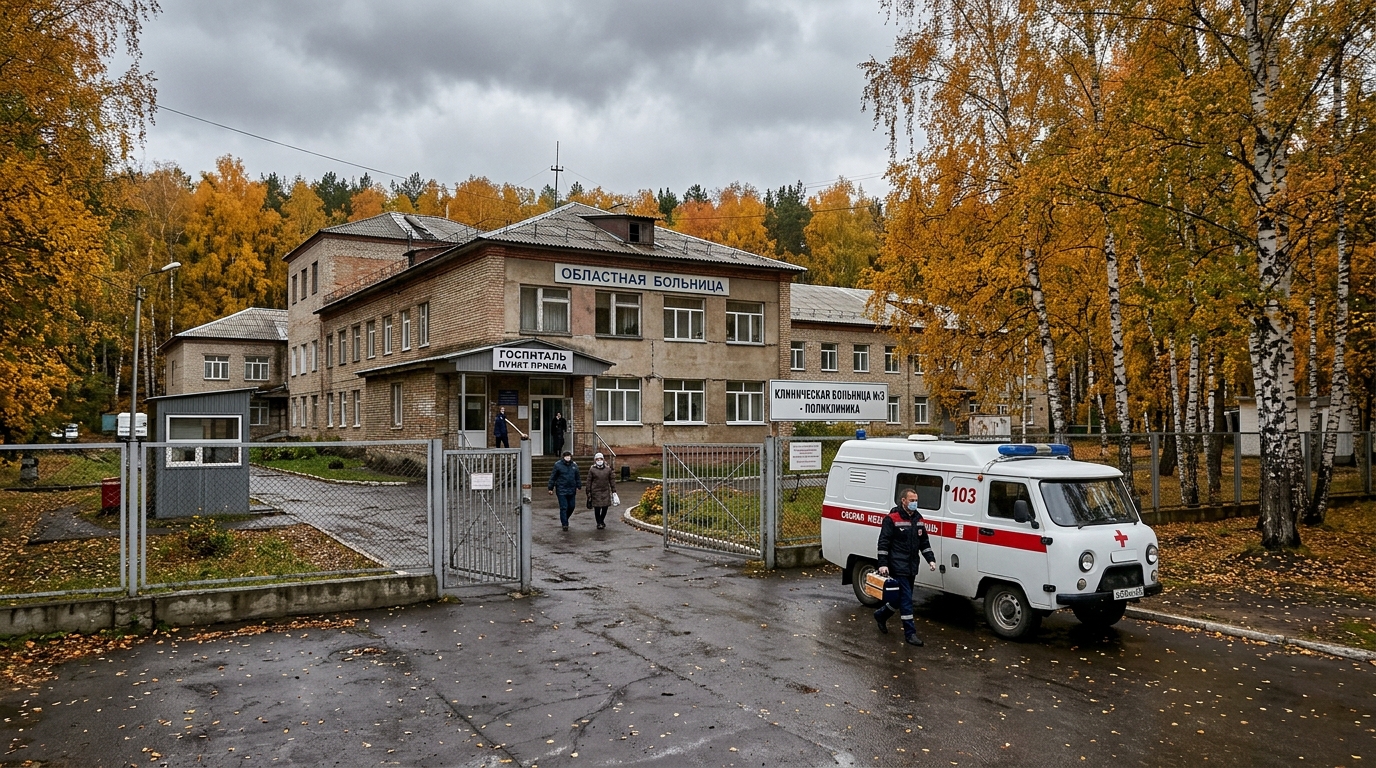
The woman, a laboratory technician named in Russian media as Darya Shipilova, worked at the Irkutsk Anti-Plague Research Institute of Siberia and the Far East. She was admitted to hospital in Shelekhov, a town near Irkutsk, with severe pneumonia around 29 September and died overnight on 1–2 October.
From 1 October, the Shelekhov district hospital stopped admitting and discharging patients in several departments, and its inpatient unit was placed under quarantine. The outpatient clinic stayed open.

On 2 October, Irkutsk Governor Igor Kobzev said a regional resident was suspected of having a “particularly dangerous infection” and held an emergency meeting attended by Rospotrebnadzor head Anna Popova. He said all known contacts were under medical observation, had no signs of illness and had tested negative.
Reports said 197 contacts were identified and 189 of them were hospitalised for observation. Independent outlets also reported that dozens of staff at the institute were isolated.
Has a second person died?
Russian media reported on 6 October that a second person had died at a hospital in Irkutsk region after allegedly contracting plague. This has not been officially confirmed. No laboratory results or official statements have linked any second death to plague.
On 7 October, WHO said Russia must clarify conflicting reports about the first death and whether there is an additional case. Until Russian authorities or WHO confirm otherwise, treat the second death as an unverified report.
How did she get infected?
Nobody knows yet, and no explanation has been officially confirmed.
Several theories have circulated:
- One regional outlet reported that she broke a test tube containing plague bacteria at work in late September.
- Other reports said she had recently returned from a work trip near the Mongolian border.
- Another report said she had returned from Thailand. Officials in neighbouring Buryatia said she had not visited their region.
Rospotrebnadzor says it found no evidence of any accident involving pathogens at the institute. Russian media have reported that investigators opened a criminal case into possible safety violations, but this does not establish a cause.
Russia’s anti-plague institutes date back to Soviet times. They monitor plague in wild animals, test samples and study the bacteria from natural plague areas in Siberia, the Altai and Mongolia. Staff at such labs are among the few groups WHO says may be offered plague vaccination.
What has been confirmed and what has only been reported?
| Claim | Status | Source type |
|---|---|---|
| A 28-year-old institute worker died in Shelekhov in early October | Confirmed | Regional officials, WHO |
| Contacts were placed under medical observation | Confirmed | Irkutsk governor, WHO |
| Contacts tested negative for dangerous infections | Confirmed by Russia | Russian message to WHO, 6 Oct |
| She died of pneumonic plague | Reported, not confirmed; denied by federal authorities | Russian media |
| Official cause: pneumonia of unknown origin | Official Russian position | Rospotrebnadzor, Irkutsk governor |
| Buryatia’s leader said she died of plague | Statement later edited to “may have died” | Regional official |
| A broken test tube caused infection | Unconfirmed; officials say no lab accident found | Regional media |
| A second person has died | Unconfirmed | Russian media |
| WHO risk: moderate to low (Irkutsk), low (Russia), very low (Europe) | Confirmed | WHO briefing, 6 Oct |
What is bubonic plague?
Plague is caused by a bacterium called Yersinia pestis, which lives naturally in small mammals such as rodents and the fleas that feed on them.
Bubonic plague is the most common form. It usually starts with a bite from an infected flea. WHO lists the symptoms as sudden fever, chills, head and body aches, weakness, nausea and vomiting, along with painful swollen lymph nodes, often in the groin, armpit or neck. Symptoms usually appear one to seven days after infection.
It is treated with antibiotics, and spread between people is rare.
What is pneumonic plague?
Pneumonic plague is plague in the lungs. It can develop when bubonic plague spreads, or when someone breathes in droplets from a person who already has it.
It is the most dangerous form for two reasons:
- It can pass from person to person through respiratory droplets.
- It moves fast: WHO says symptoms can appear in under 24 hours and include shortness of breath and coughing, sometimes with blood. Untreated, it can kill within 18 to 24 hours of symptoms starting.
The good news is that WHO says recovery rates are high when it is diagnosed and treated within 24 hours of symptoms.
Bubonic vs pneumonic vs septicaemic plague
| Form | How it spreads | Main symptoms | Fatality if untreated | Treatable? |
|---|---|---|---|---|
| Bubonic | Infected flea bites; contact with infected animals | Fever, chills, aches, painful swollen lymph nodes | 30% to 60% (WHO) | Yes, with antibiotics |
| Pneumonic | Respiratory droplets from an infected person; can develop from other forms | Fever, cough, shortness of breath, sometimes bloody sputum | Almost always fatal (WHO) | Yes, if treated very early |
| Septicaemic | Bacteria multiply in the blood; can develop from other forms | Fever, bleeding under the skin, organ failure | Almost always fatal (WHO) | Yes, if treated early |
Is plague curable?
Yes. Plague is a bacterial infection and WHO says antibiotics work well against it, so early diagnosis and treatment save lives. Common antibiotics can cure even pneumonic plague if they are given early.
The danger lies in delay. Because the pneumonic form progresses so quickly, doctors are advised to start antibiotics as soon as plague is suspected rather than wait for lab confirmation.
Is plague contagious?
It depends on the form. Bubonic plague is not normally passed from one person to another; WHO describes human-to-human spread as rare. Pneumonic plague is different: it can spread through respiratory droplets during close contact, which is why contacts in Irkutsk were isolated and tested.
Should people in the UK or elsewhere worry?
Based on current evidence, no. WHO’s initial assessment on 6 October rated the risk as moderate to low for Irkutsk, low for Russia as a whole and very low for the WHO European region, which includes the UK. WHO says it will update this as more information comes in.
The UK Foreign Office (FCDO) already advises against all travel to Russia because of the war in Ukraine. As of 7 October 2026, its Russia advice did not include any plague-specific warning. The US State Department says it is monitoring the situation with the CDC.
Anyone who feels unwell after travel to an affected area should contact a doctor or call NHS 111.
Where does plague still exist today?
Plague survives in wild animals on every inhabited continent except Oceania, according to WHO. Since the 1990s, most human cases have been in Africa. Between 2019 and 2025, most cases reported to WHO came from the Democratic Republic of the Congo and Madagascar, where bubonic plague is seen almost every year between September and April.
Russia has natural plague areas too, including mountain zones in the Altai, Tuva and the Caucasus. Over the border, Mongolia has identified 137 natural plague foci, some near Russia. Marmots are a known carrier there, and human cases in Mongolia have been linked to hunting or eating them. Russia’s last recorded human case was in 2016, when a 10-year-old boy in the Altai Republic fell ill.
What happens next?
Three things to watch:
- The official cause of death: WHO has asked Russia for lab results and more detail under the International Health Regulations.
- The contacts: So far none have shown symptoms. Pneumonic plague usually shows within days, so continued clear results would be reassuring.
- The second-death reports: Watch for confirmation or denial from Rospotrebnadzor or WHO, not social media.
Kremlin spokesperson Dmitry Peskov has told people to rely on Rospotrebnadzor for updates. For an independent view, WHO is the best source.
What has not been confirmed?
- A second plague death
- How the woman was infected
- That plague caused her death
- Any spread in the wider community
- Any wider outbreak beyond the Irkutsk case
- Any confirmed risk to international travellers
Simple timeline
- 29 September 2026: A worker at the Irkutsk Anti-Plague Institute is admitted to Shelekhov hospital with severe pneumonia (as reported).
- 1 October 2026: Shelekhov hospital suspends admissions and discharges in several departments; reports of quarantine appear.
- 2 October 2026: She dies overnight on 1–2 October. Irkutsk’s governor holds an emergency meeting on a suspected “particularly dangerous infection”. Buryatia’s leader says she died of plague, then edits it to “may have died of plague”.
- 4–5 October 2026: Rospotrebnadzor says she had pneumonia of unknown origin and calls the situation stable. The US says it is monitoring.
- 6 October 2026: Russia tells WHO no dangerous pathogens were found in contacts. WHO publishes its risk assessment. Russian media report a second death, which is not confirmed.
- Latest update (7 October 2026): WHO asks Russia to clarify the reports, including a possible second case. No plague case has been officially confirmed.
Common mistakes
-
Mistake: “This is the return of the Black Death.”
Reality: No outbreak has been confirmed. Modern plague is rare and curable with antibiotics, unlike in the 14th century. -
Mistake: “Plague cannot be cured.”
Reality: WHO says antibiotics are effective, especially when treatment starts early. -
Mistake: “A second plague death has been confirmed.”
Reality: It has only been reported by Russian media. No official body has confirmed it. -
Mistake: “Bubonic plague spreads easily from person to person.”
Reality: Bubonic plague usually spreads through flea bites. Person-to-person spread is rare. Only the pneumonic form spreads readily between people. -
Mistake: “A lab leak has been proven.”
Reality: A lab accident is one reported theory. Russian authorities deny it and no evidence has been made public.
People Also Ask
What country has the most bubonic plague cases?
According to WHO, most human plague cases reported between 2019 and 2025 came from the Democratic Republic of the Congo and Madagascar. Madagascar sees bubonic plague cases almost every year, mainly between September and April.
How fatal is pneumonic plague?
Untreated pneumonic plague is almost always fatal and can kill within 18 to 24 hours of symptoms starting, according to WHO. With antibiotics given early, ideally within 24 hours of symptoms, most people recover.
What killed more, plague or COVID?
Historically, plague. WHO says the Black Death caused more than 50 million deaths in Europe in the 14th century. COVID-19 has just over 7 million officially reported deaths worldwide, although WHO estimated about 14.9 million excess deaths in 2020 and 2021 alone. Today, plague kills very few people because it is treatable.
Is bubonic plague 100% fatal?
No. Even without treatment, WHO puts the death rate for bubonic plague at 30% to 60%. With prompt antibiotics, the large majority of patients survive.
People Also Search For
Plague outbreak russia 2026
As of 7 October 2026, no plague outbreak in Russia has been officially confirmed. One death in Irkutsk region is under investigation, and Russian authorities say no plague was found.
Russian plague outbreak second death
Russian media reported a second death on 6 October. It has not been officially confirmed, and WHO has asked Russia for clarification.
Russia plague news
The latest: Russia told WHO its tests found no dangerous infections among contacts, while WHO says the cause of the first death is not yet confirmed.
Irkutsk plague
The case involves a worker at the Irkutsk Anti-Plague Institute who died in Shelekhov after severe pneumonia. Plague is suspected in media reports but officially denied.
Bubonic plague
The most common form of plague, usually spread by flea bites. It causes fever and painful swollen lymph nodes and is treatable with antibiotics.
Pneumonic plague
Plague in the lungs. It is the most dangerous form and can spread between people, but common antibiotics can cure it if given early.
Is plague contagious
Pneumonic plague can spread between people through droplets. Bubonic plague rarely does.
Plague symptoms
Sudden fever, chills, aches and weakness, plus swollen lymph nodes for bubonic plague or cough and breathlessness for pneumonic plague (WHO).
Is plague curable
Yes. Antibiotics are effective if treatment starts early.
Russia plague travel advice
The FCDO already advises against all travel to Russia because of the war, not plague. As of 7 October, it had added no plague warning. WHO rates the risk to Europe as very low.
Full Keyword Clustering & Topical Mapping
To provide search engines and readers with an authoritative, semantically complete reference architecture on this story, below is the comprehensive Keyword Clustering and Topical Mapping Blueprint. This structure illustrates how this breaking news story connects across search queries, semantic entities, search intent tiers, and long-tail informational clusters.
1. Keyword Clusters Architecture
[CORE ENTITY: Russian Plague Outbreak / Irkutsk Incident 2026]
 ├── Cluster 1: Breaking Incident & Death Verification (Freshness / News)
 ├── Cluster 2: Official Statements & Geopolitical Verification (Authority / Fact-Check)
 ├── Cluster 3: Clinical Epidemiology & Biological Forms (Medical / Informational)
 ├── Cluster 4: Natural Reservoirs, History & Geographic Foci (Scientific / Environmental)
 └── Cluster 5: Travel Risk, Containment & Global Biosecurity (Safety / Navigational)
The table below breaks down the five core clusters, their primary search intent, target keywords, query volume tiers, and SERP feature opportunities:
| Cluster | Focus & Intent | Primary & Secondary Target Keywords | SERP Feature Targets |
|---|---|---|---|
| Cluster 1: Incident & Death Reports | Freshness / News Readers tracking breaking updates and death verification | • russian plague outbreak• plague outbreak russia 2026• irkutsk plague death• russian plague outbreak second death• darya shipilova irkutsk• shelekhov hospital quarantine | Top Stories Carousel, News Discover, Direct Answer Snippets |
| Cluster 2: Institutional Statements & Denial | Fact-Checking / Authority Validating Moscow claims versus international health alerts | • rospotrebnadzor plague statement• who russia plague clarification• tedros adhanom ghebreyesus irkutsk• pneumonia of unknown origin siberia• international health regulations russia | Quoted Table Snippets, Knowledge Panels, Entity Disambiguation |
| Cluster 3: Pathology, Symptoms & Curability | Medical / Informational Understanding health dangers, contagion mechanisms, and drugs | • pneumonic plague symptoms• bubonic vs pneumonic plague• is plague curable with antibiotics• how fatal is pneumonic plague• yersinia pestis incubation period• is plague contagious to humans | People Also Ask (PAA), Medical Definitions, Comparison Tables |
| Cluster 4: Natural Foci & Wildlife Ecology | Scientific / Historical Exploring wild reservoirs, marmots, and past Russian outbreaks | • natural plague foci mongolia russia• marmot plague transmission siberia• altai republic plague 2016• irkutsk anti plague institute history• countries with most plague cases | Explanatory Paragraphs, Geographic Knowledge Cards |
| Cluster 5: Public Health, Travel & Global Risk | Safety / Navigational Assessing international spread risk, travel warnings, and UK safety | • russia plague travel advice• who plague risk europe• uk fcdo travel warning russia• plague vaccine for general public• nhs 111 infectious disease travel | Travel Advice Callouts, FAQ Rich Snippets, Government Links |
2. Comprehensive Topical Map (Semantic Entity Graph)
A robust topical map ensures search engines recognize this content as a definitive topical authority node. The following semantic network maps core entities, attributes, and relationships:
                                  [ Yersinia pestis ]
                                           │
                    ┌──────────────────────┴──────────────────────┐
                    ▼                                             ▼
        [ Clinical Typologies ]                       [ Ecological Reservoirs ]
         ├── Bubonic (Flea-borne)                      ├── Natural Foci: Altai / Tuva
         ├── Pneumonic (Respiratory Droplets)          ├── Tarbagan Marmots (Mongolia)
         └── Septicaemic (Bloodstream)                 └── Flea Vectors (Xenopsylla)
                    │                                             │
                    └──────────────────────┬──────────────────────┘
                                           ▼
                     [ Irkutsk Event (October 2026) ]
                                           │
         ┌─────────────────────────────────┼─────────────────────────────────┐
         ▼                                 ▼                                 ▼
[ Primary Subjects ]            [ Institutional Actors ]         [ Public Health Metrics ]
 ├── Darya Shipilova (28)        ├── Irkutsk Anti-Plague Inst     ├── 197 Identified Contacts
 ├── Shelekhov Hospital Unit     ├── Rospotrebnadzor (Popova)     ├── 189 Hospitalized Contacts
 └── Second Death (Unconfirmed)  ├── WHO Geneva (Dr Tedros)       └── Risk: Very Low (Europe)
Topical Node Hierarchy & Internal Linking Architecture
- Pillar Concept: Siberian Infectious Disease Surveillance & Incident Response
- Parent Hub: Global Health & Infectious Disease Alerts
- Sub-Hub A (Breaking Incident): Chronological timeline of Shelekhov quarantine and Irkutsk laboratory technician case.
- Sub-Hub B (Fact-Check & Verification): Moscow denial vs regional statements vs WHO International Health Regulations inquiries.
- Sub-Hub C (Pathological Analysis): Medical comparison of pneumonic vs bubonic plague, antibiotic protocols, and fatality timelines.
- Sub-Hub D (Regional Ecology): The role of Russian anti-plague institutes and historical natural plague foci in Siberia/Mongolia.
- Sub-Hub E (Public Advisory): International risk assessment (WHO Europe: very low; UK FCDO baseline travel restrictions).
Entity Optimization & Schema Graph
- Primary Entity:
Plague (Disease)(Wikidata: Q133780) /Yersinia pestis(Wikidata: Q153804) - Secondary Entities:
World Health Organization(Wikidata: Q7809),Rospotrebnadzor(Wikidata: Q4492344),Irkutsk Oblast(Wikidata: Q6585),Shelekhov(Wikidata: Q198218). - Medical Entity Type:
MedicalCondition/InfectiousDisease.
3. Search Intent Mapping & Content Silo Architecture
| Search Query | Intent Classification | User Expectation / Pain Point | How This Article Resolves It |
|---|---|---|---|
| ”is there a plague outbreak in russia” | Informational (Direct Fact-Check) | Fear of a sudden epidemic or new Black Death | Clarifies immediately that no outbreak is confirmed; details the single isolated death and negative contact tests. |
| ”irkutsk plague lab worker” | Informational (Investigative) | Wants specific names, lab accident claims, and institute details | Details the 28-year-old technician, the Irkutsk Anti-Plague Institute, broken test-tube claims, and official denials. |
| ”russian plague outbreak second death” | Informational (Verification) | Checking whether unverified media claims of a second death are true | Confirms Russian media reported it on 6 October, but notes it remains unverified with WHO awaiting official data. |
| ”can pneumonic plague be cured” | Informational (Medical Reassurance) | Anxiety regarding antibiotic efficacy and fatality | Explains that early administration of standard antibiotics cures the infection and contrasts it with 14th-century mortality. |
| ”russia plague travel warning uk” | Navigational / Safety | Travelers or family members checking UK government alerts | Clarifies WHO rates European risk as very low; notes existing FCDO advice is war-related, not pathogen-related. |
Sources checked
- Official source: WHO plague fact sheet (updated 29 September 2026).
- Official source: WHO briefing in Geneva on the Irkutsk suspected plague death, 6 October 2026 (UN Geneva newsroom).
- Official source: Rospotrebnadzor and Irkutsk governor statements, as reported by TASS, Al Jazeera, CNBC and The Moscow Times.
- Official source: UK FCDO travel advice for Russia (checked 7 October 2026).
- Trusted reporting: Meduza report on the Shelekhov hospital quarantine, 2 October 2026.
- Trusted reporting: The Moscow Times, Al Jazeera, TIME, CNBC, CNN, RFE/RL and Euronews reports on the Irkutsk case.
- Trusted reporting: Washington Times report on WHO seeking clarity from Russia, 7 October 2026.
Frequently Asked Questions
No outbreak has been confirmed. One 28-year-old laboratory worker in Irkutsk died following severe pneumonia, and Russian health authorities have stated the cause of death was pneumonia of unknown origin, reporting to WHO that no plague was found in contacts.
A second death was reported by several Russian media outlets on 6 October, but it remains officially unconfirmed. WHO has requested clarification from Russian health authorities.
Bubonic plague infects the lymph nodes and is typically spread via infected flea bites with rare human-to-human transmission. Pneumonic plague infects the lungs, can spread rapidly between humans via respiratory droplets, and requires urgent antibiotic therapy within 24 hours.
Yes. Plague is a bacterial infection caused by Yersinia pestis and is curable with common antibiotics (such as streptomycin, gentamicin, and doxycycline) when administered early in the infection.
WHO evaluates the risk as moderate to low for Irkutsk, low for Russia as a whole, and very low for the WHO European Region, including the UK.
Established during the Soviet era under Rospotrebnadzor, it is a state scientific research institute responsible for monitoring, diagnosing, and researching natural plague reservoirs in wild animals across Siberia, the Altai, and the Far East.
According to WHO data, the majority of global human plague cases between 2019 and 2025 were recorded in the Democratic Republic of the Congo (DRC) and Madagascar.
Related Posts
 trending
Manchester Airport Data Breach: Am I Affected?
Manchester Airports Group confirms a data breach affecting 8.7 million customers. Find out if you are affected, what was stolen, and what to do now.
Read More trending
Serena Williams Returns at Queen's Club 2026: Details
Serena Williams has returned to tennis at the 2026 Queen's Club, winning her doubles match with Victoria Mboko. Get the latest scores and singles updates.
Read More trending
Allan Hale Suspended by Elgin City: What We Know
Elgin City have suspended first-team manager Allan Hale pending an ongoing investigation. Read what is confirmed, what is not known and what happens next.
Read More