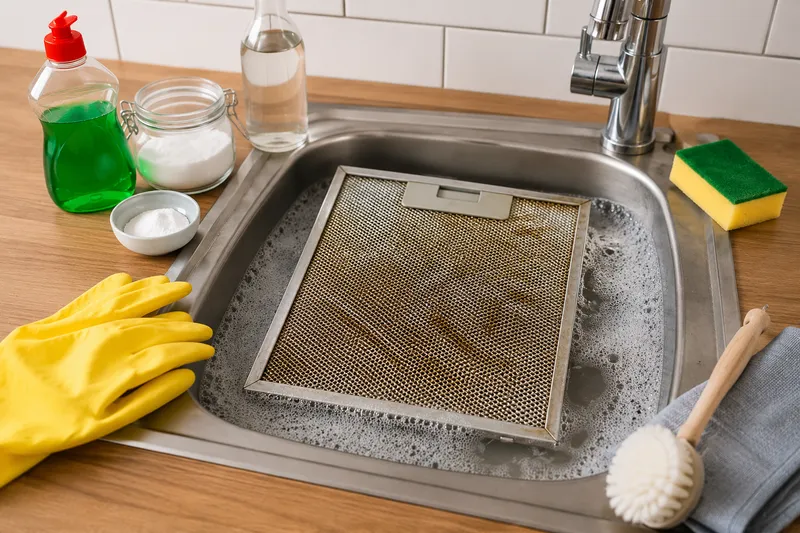
How to Clean Extractor Fan Filters: A Simple UK Guide to Removing Grease
Quick answer: Switch off the extractor fan, slide out the metal grease filter and soak it in hot water with washing-up liquid (or a kitchen degreaser) for 10 to 20 minutes. Scrub gently with a soft brush, rinse, and let it dry fully before refitting. Vinegar can help with light grease and smells, but a detergent or degreaser is usually better for heavy build-up. Most metal filters should be cleaned about once a month if you cook regularly. Charcoal or carbon filters are usually replaced, not washed.
A greasy filter is the main reason your cooker hood smells, sounds louder than usual or stops clearing steam properly. The good news: cleaning it is a 20-minute kitchen job with stuff you already have. This guide walks you through which filter type you’ve got, the safest way to clean it, when vinegar or baking soda actually helps, and when it’s time to replace the filter rather than wash it. Always check your appliance manual first — some filters have specific care instructions.
Quick answer: how to clean extractor fan filters
Turn the extractor fan off, remove the metal grease filter and soak it in hot water with washing-up liquid for 10 to 20 minutes. Scrub gently with a soft brush, rinse with clean water and dry it fully before sliding it back in.
Charcoal or carbon filters are different — they’re usually not washable and need replacing when they stop controlling smells. Always check your manual before using a dishwasher or strong cleaner on any filter.
What type of extractor fan filter do you have?
Most cooker hoods have one of these. Lift your filter out and look at it; the type usually decides the cleaning method.
| Filter type | Can you wash it? | Best cleaning method | Important note |
|---|---|---|---|
| Metal grease filter (mesh) | Yes | Hot water and washing-up liquid soak | Dry fully before refitting |
| Aluminium filter | Yes | Hand wash with washing-up liquid | Strong dishwasher detergent can discolour it |
| Stainless-steel filter | Yes | Hot soapy soak; dishwasher if manual allows | More durable, but still check the manual |
| Charcoal filter | Usually no | Replace | Some specialist types are regenerable — check the manual |
| Carbon filter | Usually no | Replace | Often replaced every few months with regular use |
| Paper or disposable filter | No | Replace | Don’t soak or wash |
If you’re not sure which one you have, the appliance manual or the manufacturer’s website will say. Many cooker hoods have both a metal grease filter (washable) and a charcoal filter behind it (replace).
What you’ll need before you start
- Washing-up liquid
- Hot water
- A washing-up bowl or clean sink
- A soft brush or old toothbrush
- A microfibre cloth
- Rubber gloves
- Baking soda (optional)
- White vinegar (optional)
- A kitchen degreaser (optional, for heavy grease)
- A towel or drying rack
- Your appliance manual, if you have it
Don’t mix cleaning chemicals — especially bleach and vinegar, which can release harmful fumes.
Step-by-step: how to clean metal extractor fan filters
- Turn off the extractor fan at the switch and let the hob and hood cool.
- Slide or unclip the filter out, following the directions in your manual.
- Tap or wipe off any loose grease and crumbs over the bin.
- Fill a sink or bowl with hot (not boiling) water and a generous squirt of washing-up liquid.
- Lower the filter in and leave it to soak for 10 to 20 minutes.
- Scrub gently with a soft brush or old toothbrush, working with the mesh — not against it.
- Rinse under running water until the water runs clear.
- If grease remains, repeat the soak with fresh hot soapy water.
- Stand the filter on a towel or drying rack and let it dry completely.
- Slide the dry filter back into place and check it sits flush.
A wet filter can drip into the motor housing, so don’t rush the drying step.
How do you clean a greasy extractor fan filter?
For sticky, brown-stained filters, you need more than a quick rinse:
- Use very hot water from the tap (not boiling water poured straight from the kettle into a fragile bowl or onto thin enamel).
- Add washing-up liquid plus a couple of tablespoons of baking soda.
- Soak the filter for 30 to 60 minutes.
- Scrub with a soft brush, working in small sections.
- For very heavy build-up, switch to a kitchen degreaser and follow the label.
Avoid wire wool and metal scourers — they scratch the mesh and can leave bits of metal in the filter. Stick to soft brushes or non-scratch sponges.
Can I put vinegar in my filter to clean it?
White vinegar is fine for light grease and helps with stale cooking smells, but it’s not the strongest option for heavy kitchen grease. Grease responds better to a detergent because washing-up liquid is designed to break it down — vinegar is mostly an acid for limescale and odours.
If you do want to use it, mix a 50/50 solution of hot water and white vinegar, soak for 15 minutes, then finish with washing-up liquid and a rinse. Don’t soak charcoal or carbon filters in vinegar unless your manual says they’re washable.
How to clean extractor fan filters with baking soda
Baking soda gives your soak a gentle boost:
- Fill the sink with hot water and washing-up liquid.
- Add 2 to 3 tablespoons of baking soda and stir.
- Lower the filter in and soak for 20 to 30 minutes.
- Scrub gently with a soft brush, then rinse and dry.
For stubborn spots, mix a little baking soda with a few drops of water to make a soft paste. Dab it on, leave for a minute or two, then brush gently. Don’t grind paste into delicate mesh.
Can extractor fan filters go in the dishwasher?
Some metal grease filters are dishwasher-safe, but only if the manufacturer says so. Check the manual or the back of the filter for a symbol or note.
A few things to keep in mind:
- Aluminium filters often discolour in the dishwasher, especially with strong tablets.
- Heavily greasy filters can leave residue on your dishes — soak them by hand first.
- Run them on a normal cycle, not an intensive one, and skip rinse aid if it’s known to spot the metal.
- Charcoal, carbon, paper or disposable filters should not go in the dishwasher.
If in doubt, hand wash. It’s gentler and you can see what you’re doing.
What’s the best way to clean an extractor fan?
Cleaning the filter is half the job. To clean the whole hood:
- Turn the fan off at the switch first.
- Wipe the outside of the hood with a cloth wrung out in warm soapy water.
- For stainless steel, wipe along the grain to avoid streaks.
- Clean grease from the underside of the hood where the filter sits.
- Don’t soak buttons, switches or the motor housing.
- Don’t spray cleaner directly into vents, lights or the fan motor — spray onto the cloth instead.
- Dry every surface with a clean microfibre cloth.
- Refit the filter only when it’s completely dry.
If a light cover unclips, wash it in warm soapy water and dry it before clipping it back.
How often should you clean extractor fan filters?
Use this as a rough guide:
- Heavy frying or daily cooking: every 2 to 4 weeks
- Normal family cooking: about once a month
- Light cooking only: every 2 to 3 months
- Charcoal or carbon filters: replace per the manual, often every 3 to 6 months with regular use
These are starting points. If your hood smells, sounds louder or steam isn’t clearing as fast, clean the filter sooner.
How do you know the filter needs cleaning?
Watch for these signs:
- The filter feels sticky or tacky to touch
- You can see grease on the mesh or it looks dark
- Cooking smells linger longer than usual
- Airflow feels weaker
- The fan sounds louder or strained
- Grease is starting to drip from the underside of the hood
- Steam isn’t clearing properly while you cook
If you spot any two of these together, it’s time to take the filter out.
How to clean the extractor fan body
- Turn off the power at the switch.
- Use a soft cloth dampened with warm soapy water to wipe the outside and underside.
- For tougher grease, use a kitchen degreaser on the cloth — never sprayed directly into the unit.
- Avoid soaking controls, lights or the motor area.
- Dry with a clean cloth.
- For stainless steel, finish by wiping along the grain with a dry microfibre cloth.
Don’t poke cloths or brushes into the fan motor or vent. If grease has built up inside the housing, that’s a job for an appliance specialist.
Can you clean charcoal or carbon extractor filters?
Most charcoal and carbon filters are not washable. They absorb cooking smells, and once they’re saturated, washing won’t restore them. They need replacing.
A few specialist filters are described as “regenerable” — these can sometimes be heated in an oven to refresh them, but only if the manual gives a method. If your hood vents back into the kitchen rather than outside, the carbon filter does most of the smell control. If smells linger after you’ve cleaned the metal grease filter, the carbon filter is usually due for replacement.
What not to do when cleaning extractor fan filters
- Don’t put charcoal or carbon filters in water unless the manual says they’re washable.
- Don’t soak motors, switches or anything electrical.
- Don’t spray cleaner into the motor or vents.
- Don’t mix bleach with vinegar or other cleaners — the fumes are dangerous.
- Don’t use wire wool, steel scourers or harsh abrasives on the mesh.
- Don’t refit a damp filter — it can drip into the motor and cause problems.
- Don’t ignore heavy grease build-up; it makes the hood less effective and harder to clean later.
- Don’t put unknown filter types in the dishwasher to “see what happens”.
Common mistakes
- Mistake: All extractor filters can be washed. Reality: Metal grease filters yes, charcoal and carbon filters no. Check before you soak anything.
- Mistake: Vinegar is the best cleaner for heavy grease. Reality: Detergent and degreaser cut through grease better. Vinegar is helpful for light grease and smells.
- Mistake: A quick wipe is enough for a greasy filter. Reality: Grease sits in the mesh, not just on the surface. A proper soak gets it out.
- Mistake: Filters can go back in while damp. Reality: Wet filters can drip into the motor. Dry them fully first.
- Mistake: Charcoal filters last forever. Reality: They saturate over time and need replacing — check your manual for timing.
People Also Ask
How do you clean a greasy extractor fan filter?
Soak it in hot water with washing-up liquid for 20 to 30 minutes, with a couple of tablespoons of baking soda added if it’s heavily caked. Scrub gently with a soft brush, rinse, and use a kitchen degreaser if grease remains. Dry fully before refitting.
Can I put vinegar in my filter to clean it?
White vinegar can help with light grease and stale smells, but washing-up liquid or a degreaser usually works better on heavy cooker-hood grease. Don’t soak charcoal or carbon filters in vinegar unless the manual says they’re washable.
What’s the best way to clean an extractor fan?
Clean or replace the filter, then wipe the outside and underside of the hood with warm soapy water on a cloth. Avoid the motor, switches and vents, and let everything dry before refitting. Replace charcoal filters when they stop controlling smells.
How often should you clean extractor fan filters?
About once a month is a good general rule for normal cooking. Clean every 2 to 4 weeks if you fry or cook heavily, or every 2 to 3 months for light use. Replace charcoal filters per your appliance manual.
People Also Search For
How to clean cooker hood filter
Take out the metal grease filter, soak in hot soapy water for 10 to 20 minutes, scrub gently and dry fully before refitting.
Clean greasy extractor fan filter
Use a longer hot soapy soak with baking soda, scrub with a soft brush, and switch to a kitchen degreaser for very heavy grease.
Dishwasher extractor fan filter
Only use the dishwasher if the manufacturer allows it. Aluminium can discolour, and heavy grease is better soaked off by hand first.
Charcoal extractor fan filter
Usually replaced rather than washed. If smells linger after you’ve cleaned the metal filter, the charcoal filter is likely due for replacement.
Clean extractor fan filter with vinegar
Mix 50/50 hot water and white vinegar for light grease and odours. For heavy grease, follow up with washing-up liquid.
Clean extractor fan filter with baking soda
Add 2 to 3 tablespoons of baking soda to hot soapy water, soak the filter, scrub gently and rinse well.
Clean extractor fan filter with washing up liquid
Soak in hot water with a generous squirt of washing-up liquid for 10 to 20 minutes, scrub, rinse and dry.
How to clean kitchen extractor fan filter
Switch off the fan, remove the metal filter, soak in hot soapy water, scrub, rinse and dry fully before refitting. Replace charcoal filters separately.
FAQs
Why is my extractor fan still smelly after cleaning the filter? The metal filter handles grease, but the charcoal or carbon filter handles smells. If odours stay after cleaning the mesh, the charcoal filter likely needs replacing.
Can I use bleach on extractor fan filters? It’s not recommended. Bleach can damage aluminium and shouldn’t be mixed with other cleaners. Stick to washing-up liquid or a kitchen degreaser.
Can I clean extractor fan filters in boiling water? Very hot tap water is fine, but pouring boiling water from the kettle into a thin sink or bowl can crack it and may warp some lighter aluminium filters. Hot soapy water from the tap is safer.
How long should I soak greasy filters? 10 to 20 minutes for normal grease, 30 to 60 minutes for heavy build-up. Refresh the water if it goes cold or cloudy.
Can I clean filters in a rental property? Yes — cleaning the filter is normal upkeep. For anything beyond cleaning (loose fittings, faulty motor, electrical issues), report it to your landlord or letting agent rather than trying to repair it yourself.
When should I replace an extractor fan filter? Replace metal filters if they’re bent, damaged or won’t come clean. Replace charcoal or carbon filters per the manual, usually every few months with regular use, or sooner if smells linger.
Bottom line
Cleaning extractor fan filters is one of the easiest jobs in the kitchen, and it makes a real difference to how well your hood handles steam, grease and smells. Soak metal grease filters in hot water and washing-up liquid, scrub gently, dry fully and put them back. Use vinegar or baking soda if you want, but detergent does the heavy lifting on grease. Replace charcoal or carbon filters rather than washing them. Check your manual before using a dishwasher or strong cleaner, and never soak the motor, switches or any electrical part. Stay on top of it — about once a month for most homes — and your kitchen will smell fresher and your hood will work the way it should.
Sources checked
- Manufacturer source: General cooker hood and extractor fan user manuals for guidance on filter removal, washing and dishwasher suitability.
- Manufacturer source: General carbon and charcoal filter replacement guidance for recirculating cooker hoods.
- Safety source: General home electrical-appliance safety guidance on switching off appliances before cleaning and avoiding water on electrical parts.
- Cleaning source: Reputable UK home-cleaning guidance on degreasing kitchen surfaces and metal filters with washing-up liquid, baking soda and white vinegar.
Frequently Asked Questions
The metal filter handles grease, but the charcoal or carbon filter handles smells. If odours stay after cleaning the mesh, the charcoal filter likely needs replacing.
It's not recommended. Bleach can damage aluminium and shouldn't be mixed with other cleaners. Stick to washing-up liquid or a kitchen degreaser.
Very hot tap water is fine, but pouring boiling water from the kettle into a thin sink or bowl can crack it and may warp some lighter aluminium filters. Hot soapy water from the tap is safer.
10 to 20 minutes for normal grease, 30 to 60 minutes for heavy build-up. Refresh the water if it goes cold or cloudy.
Yes — cleaning the filter is normal upkeep. For anything beyond cleaning (loose fittings, faulty motor, electrical issues), report it to your landlord or letting agent rather than trying to repair it yourself.
Replace metal filters if they're bent, damaged or won't come clean. Replace charcoal or carbon filters per the manual, usually every few months with regular use, or sooner if smells linger.
Related Posts
 guides
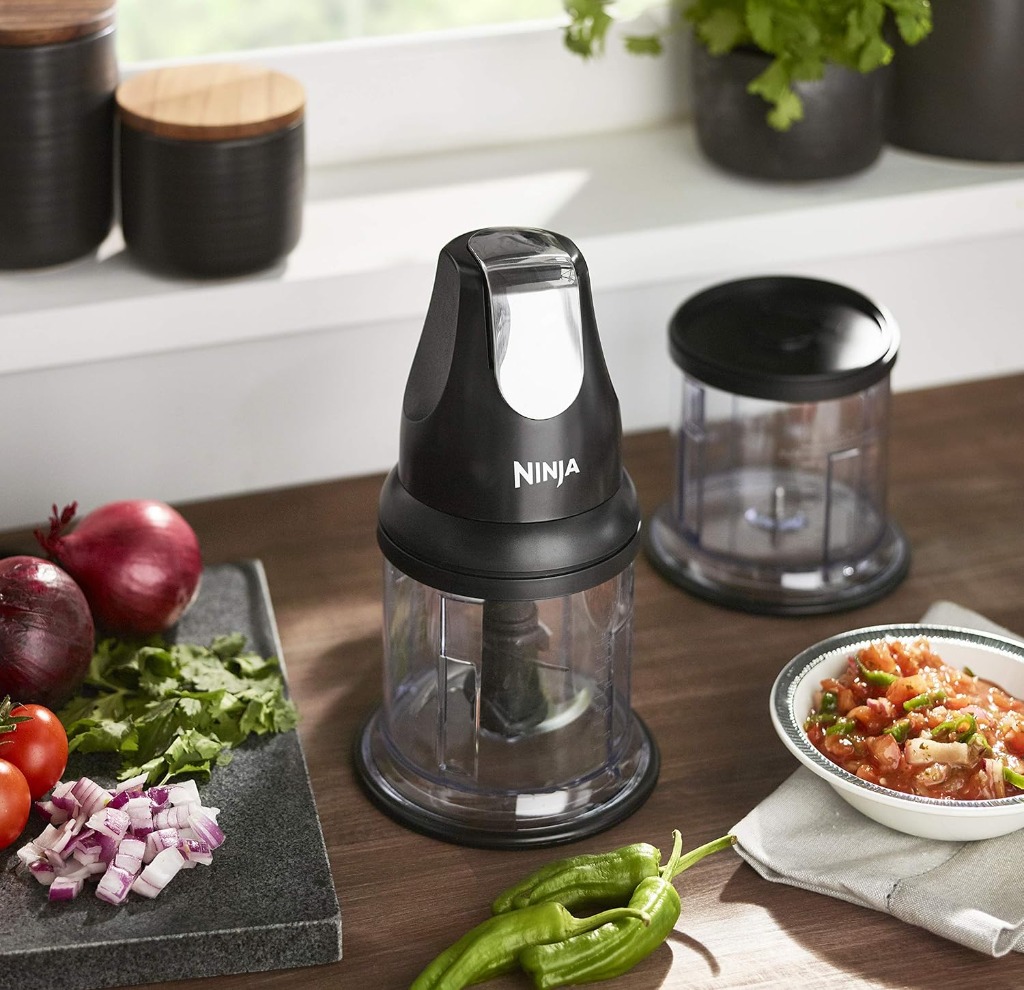
 Ninja Express Chop Mini Chopper Review: Is It Worth It?
Looking for the best mini chopper for a small kitchen? Read our honest Ninja Express Chop Mini Chopper review to see if this compact power pod is worth your money.
Read More guides
 How Much Does It Cost to Rewire a Home in the UK? (2025/26)
Calculate the average cost of rewiring a house in the UK. Typical price ranges for 2, 3 and 4 bed homes, signs you need a rewire, and process timeline.
Read More guides
 UK Social Media Ban for Under-16s: What Parents Need to Know
Understand the upcoming UK social media ban under 16. Learn which apps are banned, when it starts, how it is enforced, and the impact on families.
Read More